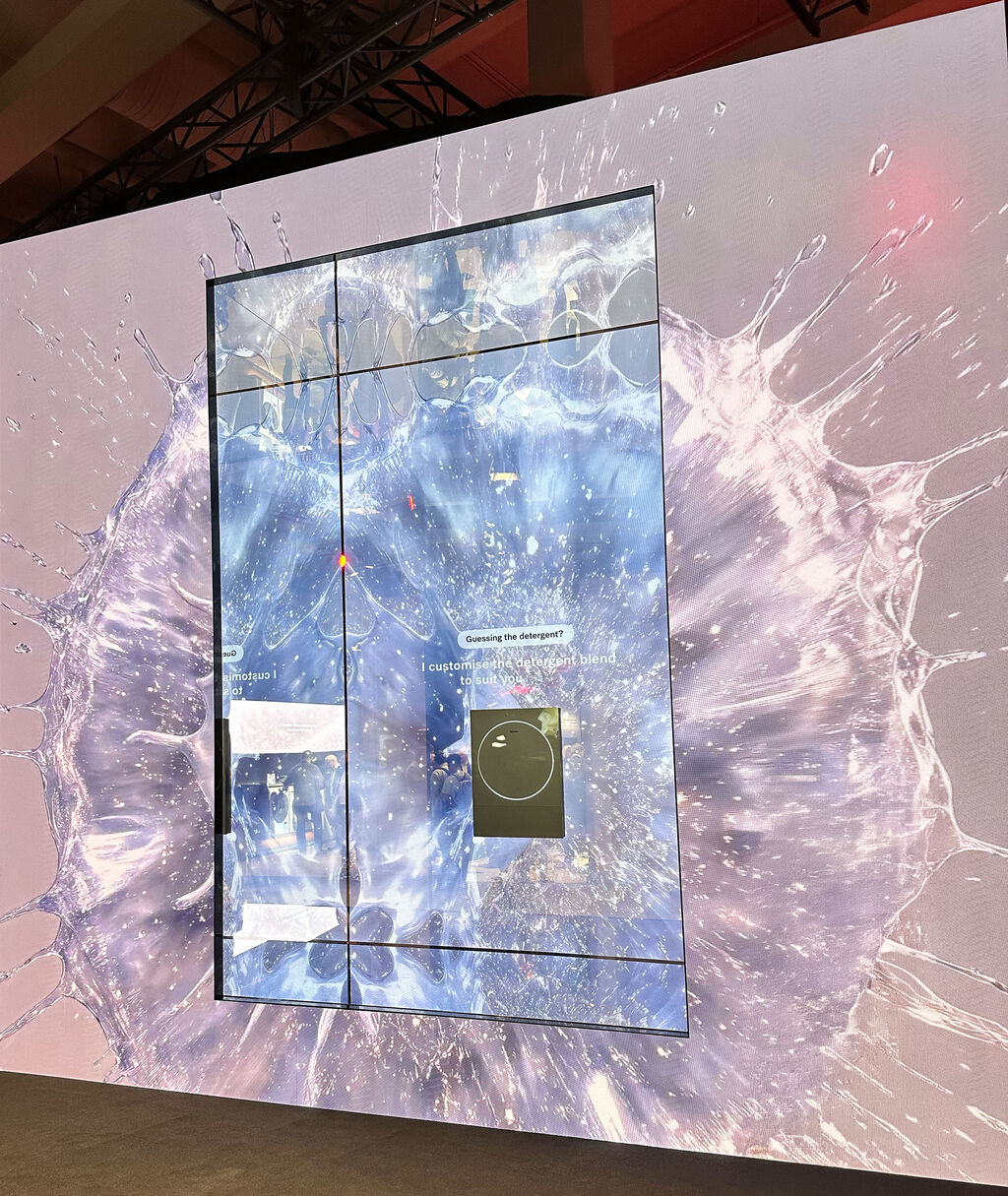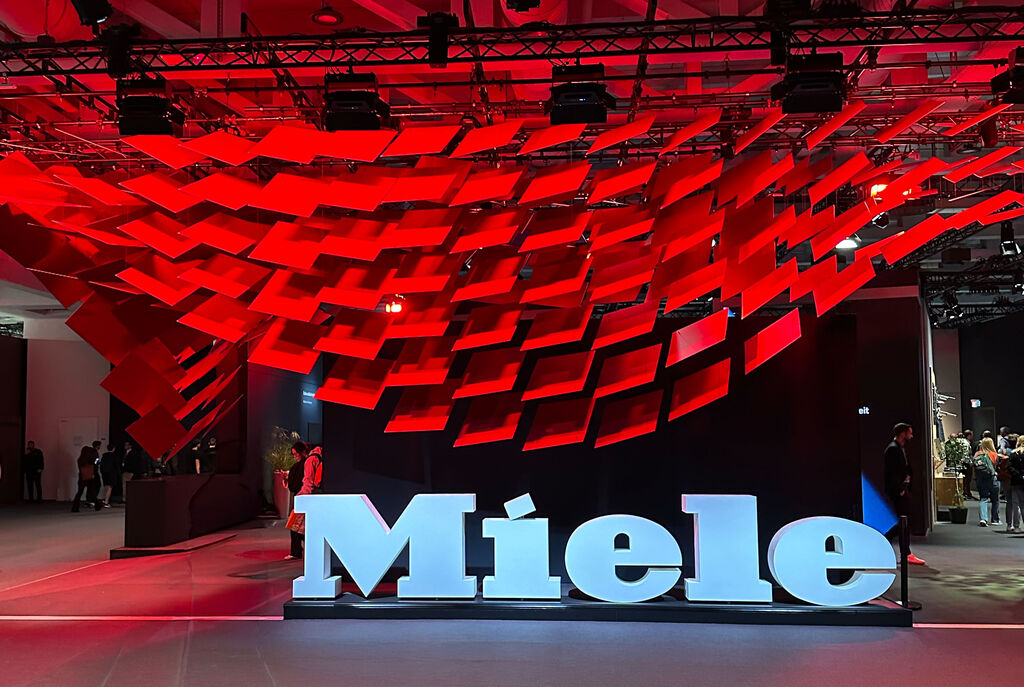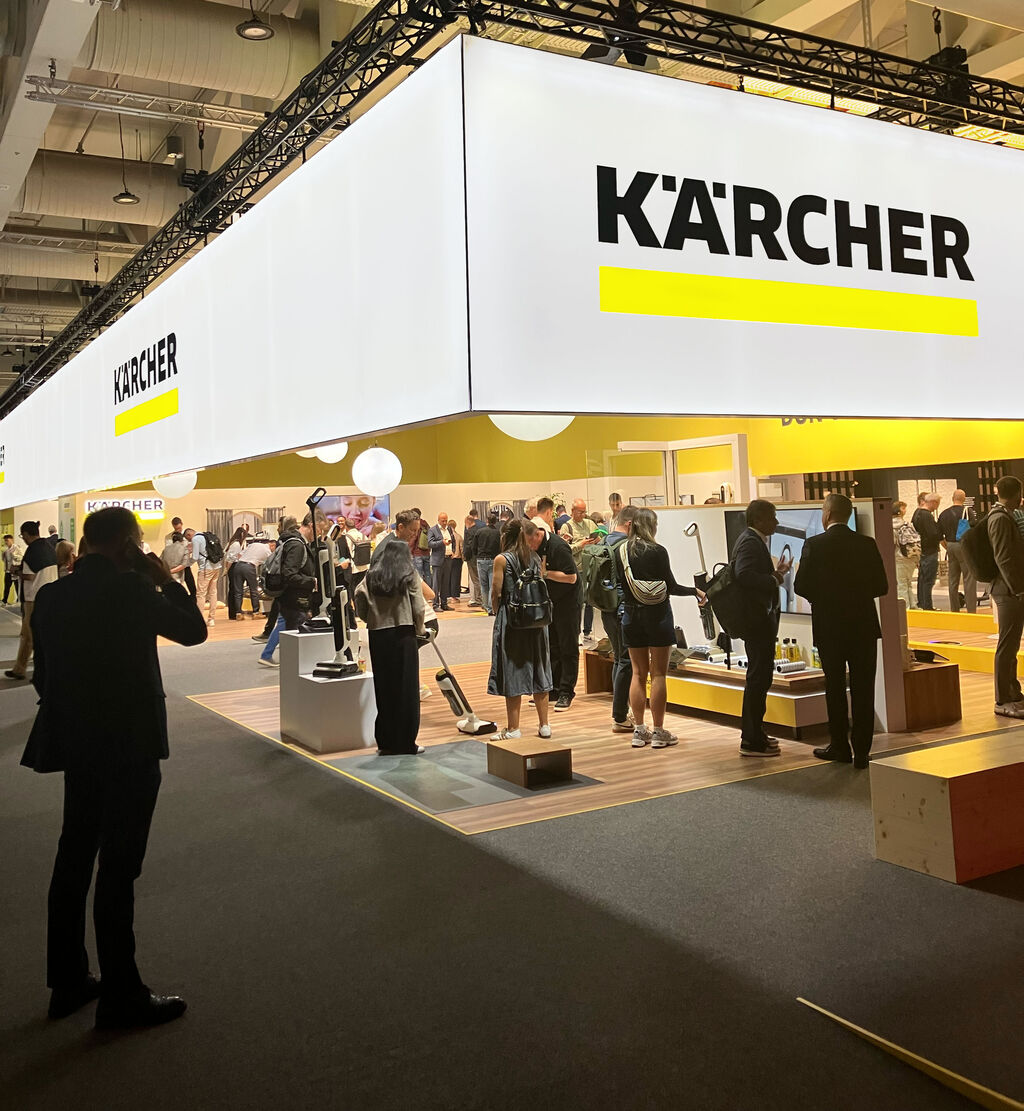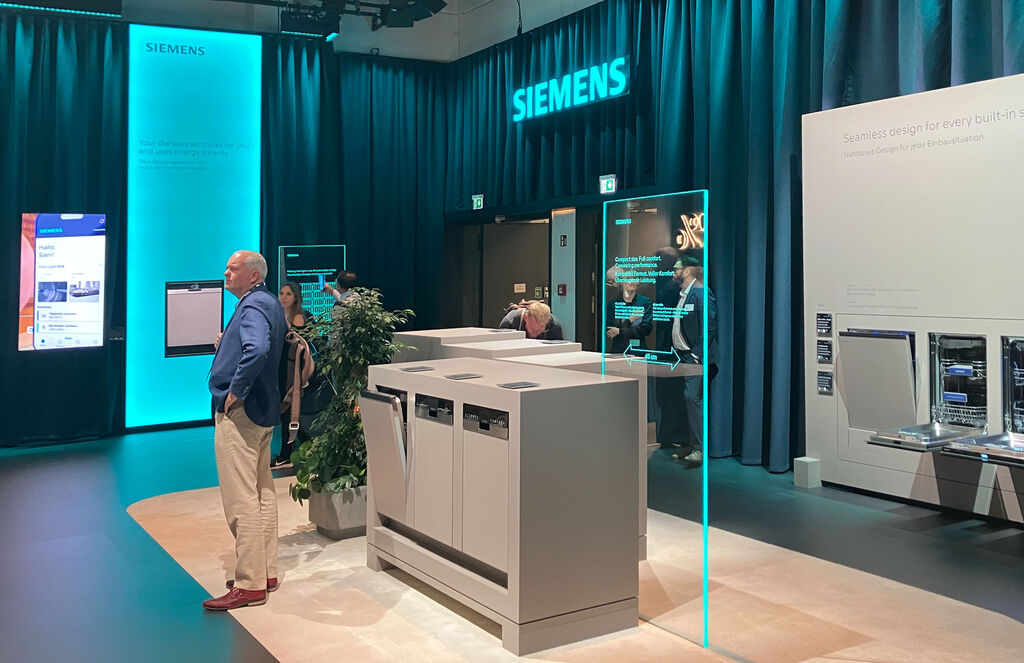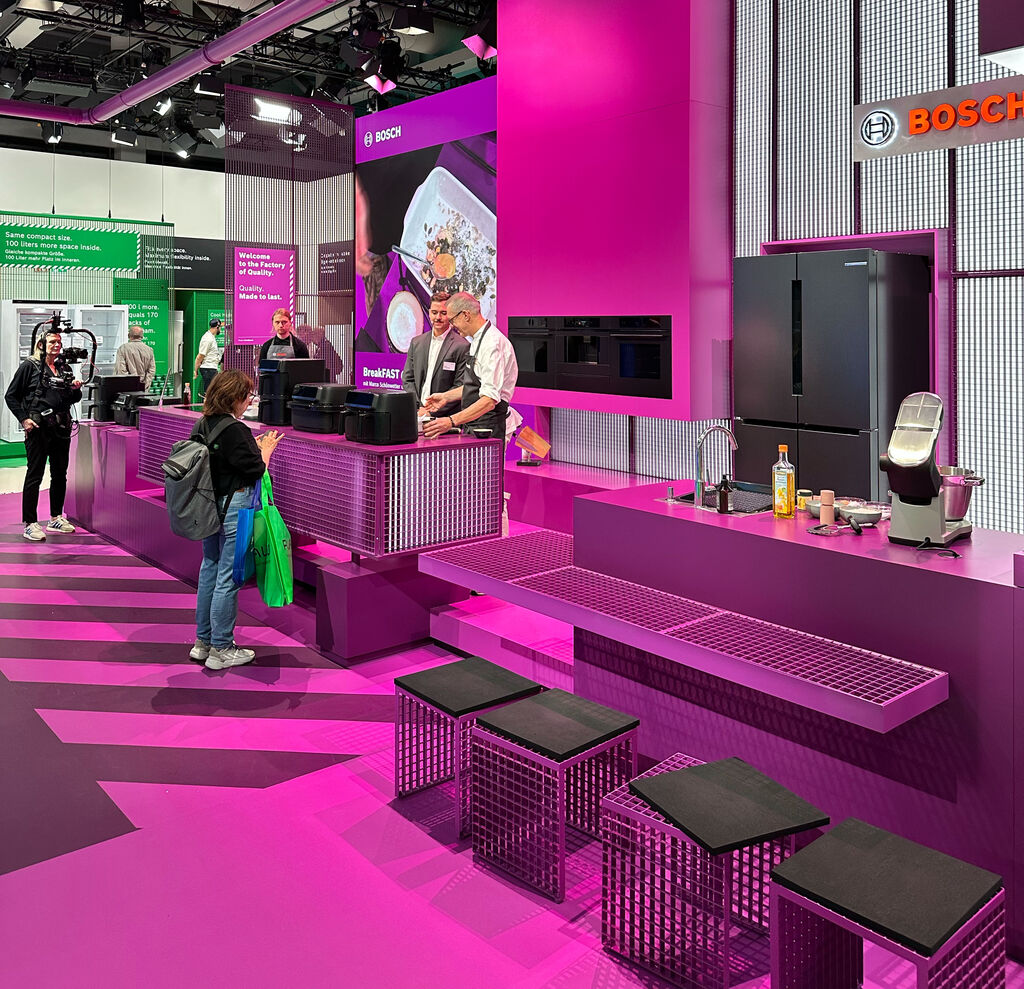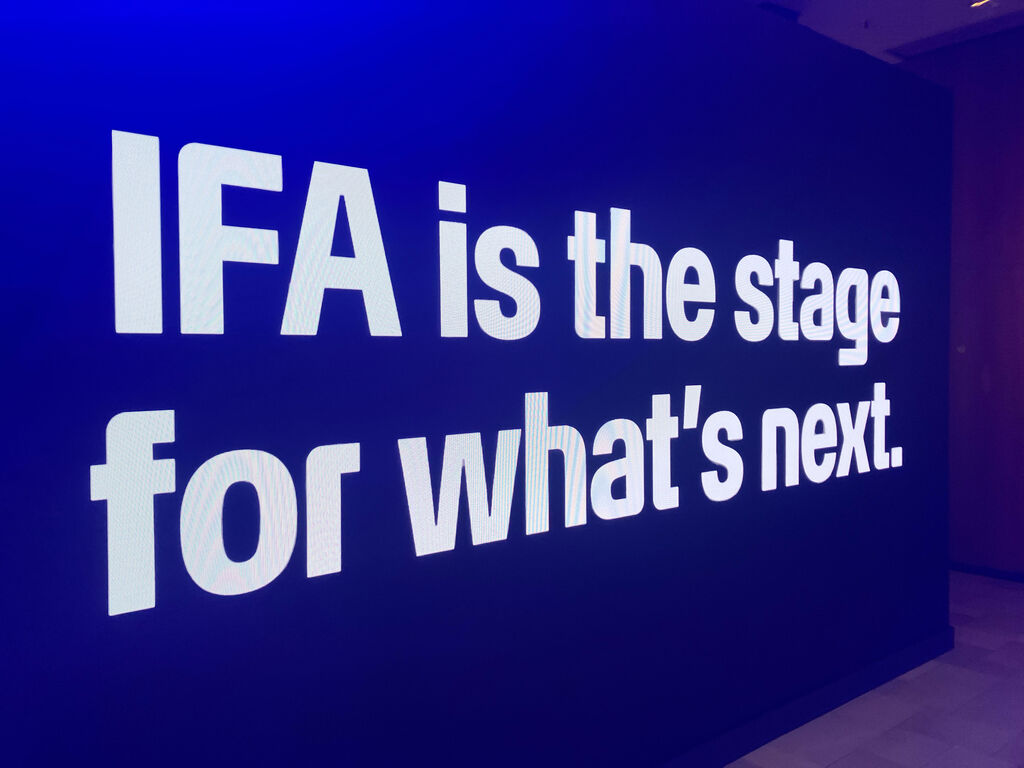
Walking through IFA this year, one question stayed with me: where are brand appearances at trade fairs heading? The tools available to brands have never been more powerful. AI-generated imagery, real-time content, LED walls, immersive scenography and digital interaction seem to make it easy to create something impressive. But that ease comes with a risk.
When Spectacle Becomes Generic
When spectacle seemingly becomes effortless, it can also become generic. The result might be what we call AI-slop in physical space: highly polished, visually overloaded environments that look expensive, but feel strangely soulless. Materials are used against their own logic. Surfaces are overproduced. Effects replace storytelling. Even though the booth becomes a stage for technology, it will not necessarily become one for the brand. And this is where the real design question begins. How do you create a spatial experience, that stands out from all the surrounding noise by exploring new formats — while staying true to the identity of the brand? How far can you move away from established brand codes and signals without losing the core? How much flashy tech is necessary? And when does a digital element create genuine value rather than simply demonstrating what is technically possible?
At IFA 2026, the moments that stayed with me were rarely the loudest ones. They were often the most precise ones.