Video is loading…

Vibe Coding: Prototypes for Design Processes

At MetaDesign, design has always meant more than aesthetics. Brands are created here not merely as visual outcomes, but as systems of rules, principles, and relationships.

To develop such systems, we are increasingly working with technology and building our own tools to support the design process. Not because we want to become a software company, but because many design questions today can be answered more effectively when design is also approached functionally.

One development currently plays a particularly important role in this context: vibe coding. It is a new form of programming in which software is no longer written exclusively by developers, but is created through precise instructions given to AI models. Instead of writing lines of code, you describe what a program should do and, shortly afterward, receive a working application.

The term was coined in early 2025 by AI researcher Andrej Karpathy. At the time, the concept still seemed like a mix of experiment and technical gimmick. But within just a few months, the capabilities of generative models advanced dramatically. Today, applications can be prototyped quickly — often directly from an idea. For design, this opens up an entirely new dimension.
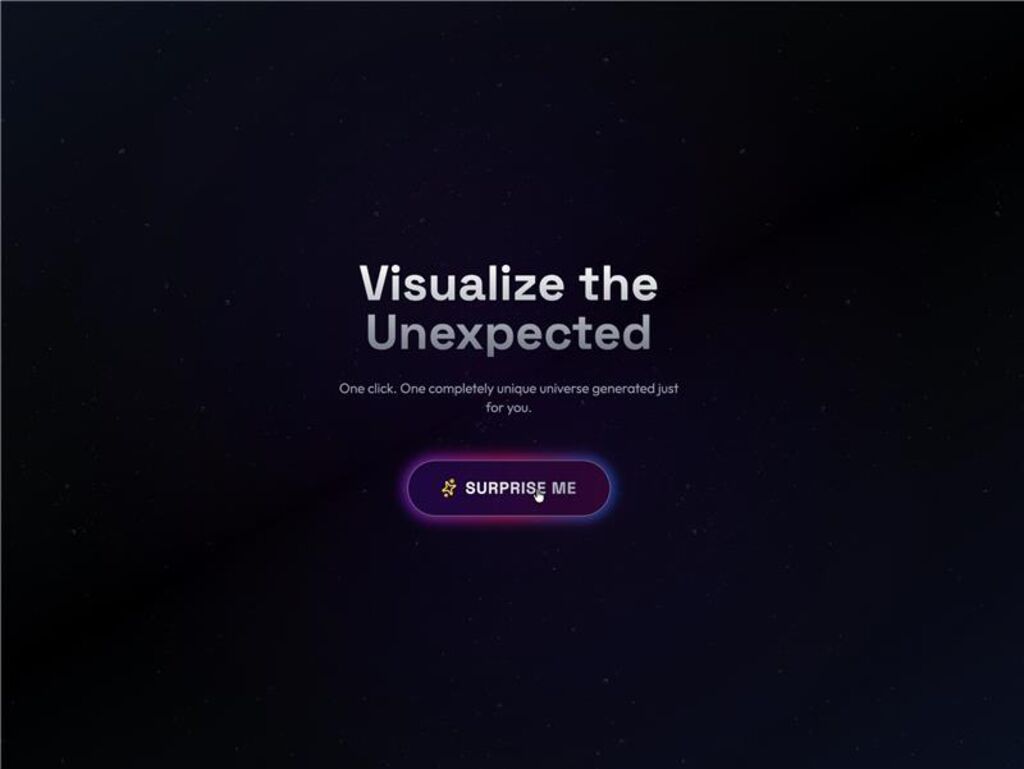
Suprise Button V2

In our workshop format “Prompt Battle,” participants were tasked with creating a program featuring a button that surprises users with every click.

From Experiment to Tool

At the MetaDesign AI Lab, we regularly test such technologies in practice. The goal is not only to observe developments, but to understand how they are changing our work and what potential they hold for design processes.

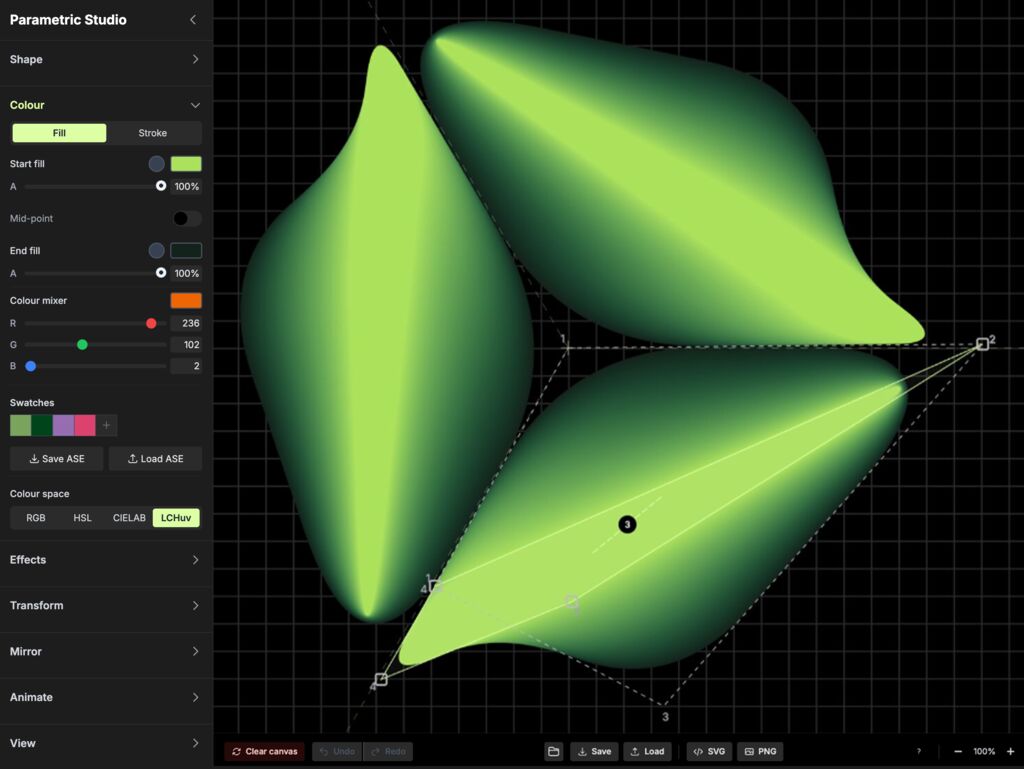
This increasingly leads to tools that emerge from simple prompts. One example is Parametric Studio: an application that allows graphic forms to be combined parametrically and new visual structures to be generated — similar to traditional design software, but significantly more flexible and exploratory.

Other applications emerge directly from specific project requirements: an AI-supported app that generates photographic visual worlds and was successfully used in a pitch; a script that automatically converts hundreds of illustrations from RGB into brand-compliant print colors; or small programs that generate maps, illustrations, or texts consistently in a brand’s tone of voice.

What is being created here is not traditional software products. These are tools for design and thinking processes.

260226 Parametric Studio Drag drop colour 5

Ian Warner developed Parametric Studio, an app for creating intriguing graphic forms. The app can be tried out directly on Google’s AI Studio.

More Than Efficiency

Of course, this way of working saves time. Repetitive tasks can be automated, and exploration becomes faster. But the real added value lies elsewhere: in the quality of design. When tools can be developed quickly, there is more room for variation, more testing, and more precise decisions. Budgets can be used more intelligently — not for manual production, but for conceptual work. Design does not simply become more efficient as a result. It becomes more powerful.

PSD FILE FREE

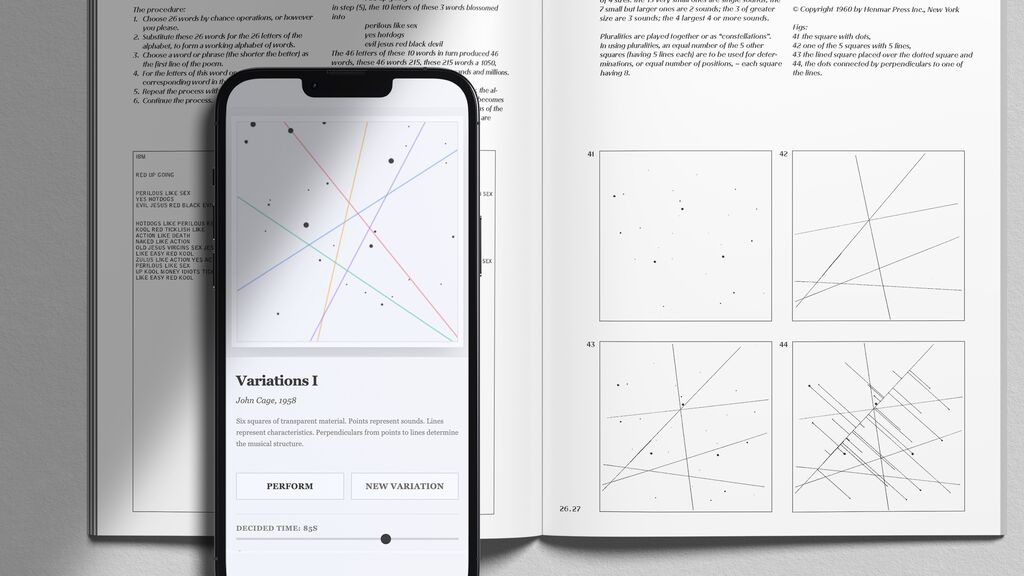
John Cage’s piece “Variations I” for David Tudor premiered on his birthday in January 1958. In 2025, an AI interpreted the work – a striking demonstration of how precisely technology can understand complex rule sets and translate them into interactive programs.

Design as a Rule-Based System

This becomes especially clear in the development of design systems. In a current project, a graphic system had to be translated from a pitch phase into a consistent design. Instead of manually designing hundreds of possible variations, a small program was created that makes key parameters — colors, line weights, shapes, and arrangements — controllable via sliders. The system can now be explored in real time: variations emerge dynamically, the boundaries of the design become visible, and decisions can be made on a more informed basis.

The idea behind this is not new. As early as 1964, Swiss designer Karl Gerstner showed in his book Designing Programmes that design can be understood as a structured sequence of actions, much like a television or theater program. According to this view, design does not emerge solely from random decisions, but from a planned system. What has changed today is the way this system is explored. In the past, design development often meant manual exploration: variations were created, compared, and discarded again — a necessary but time-consuming process. With AI, it is now possible to develop tools that enable this exploration directly.

Vibe coding helps us build designs in a more structured way and to think of them — in the double sense of the word — as programs. We are developing prototypes for design processes.

The Role of AI

In the current AI discourse, people often ask whether technologies might one day generate complete design systems: typography, visual language, and tone of voice — automatically created and delivered on demand.

The idea seems plausible, but it underestimates one crucial factor: data quality. Generative models learn from what is available on the internet — and that is often average. Brands, by contrast, are built on precise differentiation and on a distinct design attitude. That is exactly where the role of design lies.

Technology will therefore remain a tool for us — rather than elevating itself to the role of designer. The decisive question is not whether AI will replace our craft, but how we can use it to become better: in our design systems, our modes of expression, and our thinking.